Wedding Photography Trends for 2026: What's In, What's Out
From film revival to QR code guest galleries and live slideshows, here are the 10 biggest wedding photography trends defining 2026 — and what couples are actually booking.

Quick Answer
The biggest 2026 wedding photography trends: film/analog revival, candid documentary style over posed portraits, two-part photo archives (professional gallery + QR code guest uploads), drone as standard for outdoor weddings, and live slideshows during receptions. Most couples now combine a professional photographer (350–500 edited images) with a QR code guest system (700–1,200 candid uploads) for full coverage.
What are the biggest wedding photography trends in 2026?
The biggest wedding photography trends in 2026 center on authenticity over perfection: film and analog aesthetics, photojournalistic candid coverage, and hybrid professional-guest galleries where couples collect hundreds of raw moments alongside their edited professional set.
At a glance — what's in and what's out in 2026:
| ✅ In | ❌ Out |
|---|---|
| Film & analog aesthetics (Portra 400, grain, warmth) | Heavy HDR editing and over-retouching |
| Documentary/candid coverage all day | Hour-long posed portrait marathons |
| Two-part archives: pro gallery + guest QR uploads | Chasing guests for photos after the wedding |
| Drone shots as standard for outdoor venues | Drone as an expensive premium add-on |
| Live photo slideshows at the reception | Wedding hashtags nobody uses |
| Golden-hour portrait slots built into the timeline | Midday harsh-light portrait sessions |
| B&W editorial frames, photo-film hybrid reels | One-style-fits-all galleries |
Posed portraits haven't disappeared, but they've been compressed — most couples now allocate 20–30 minutes to formal portraits and ask their photographer to spend the rest of the time capturing natural moments. The rise of QR code guest photo systems has changed what "wedding photography" means at a practical level: the average 2026 couple receives their professional gallery (350–500 edited images) alongside 700–1,200 unedited guest uploads, creating a two-part archive where the professional photos tell the polished story and the guest photos provide the texture and feeling of the day.
1. Film and analog photography is back — and it's serious
Film photography at weddings is no longer a novelty. In 2026, roughly 30% of couples booking premium photographers are either requesting hybrid digital-film coverage or hiring a dedicated film photographer alongside their main shooter. The aesthetic driver is simple: film has a warmth, grain, and color cast that cannot be perfectly replicated in Lightroom. Kodak Portra 400 and Fuji 400H Pro remain the most-booked films for outdoor ceremonies; Ilford HP5 dominates for black and white second-shooter rolls.
The practical result for couples: expect to pay $500–$1,500 more for a film-hybrid photographer, and expect longer turnaround (6–12 weeks instead of 4–8). The tradeoff is 80–150 film frames that feel distinctly different from the digital edit — and that couples tend to print far more frequently.
Disposable cameras, which saw a major resurgence in 2023–2024, have matured from trend to standard option. Many venues now include disposable camera baskets at tables as a default décor element, and services that develop and scan disposables within 5–7 days have emerged to meet demand.
2. Candid documentary-style coverage has replaced posed portraits as the primary style
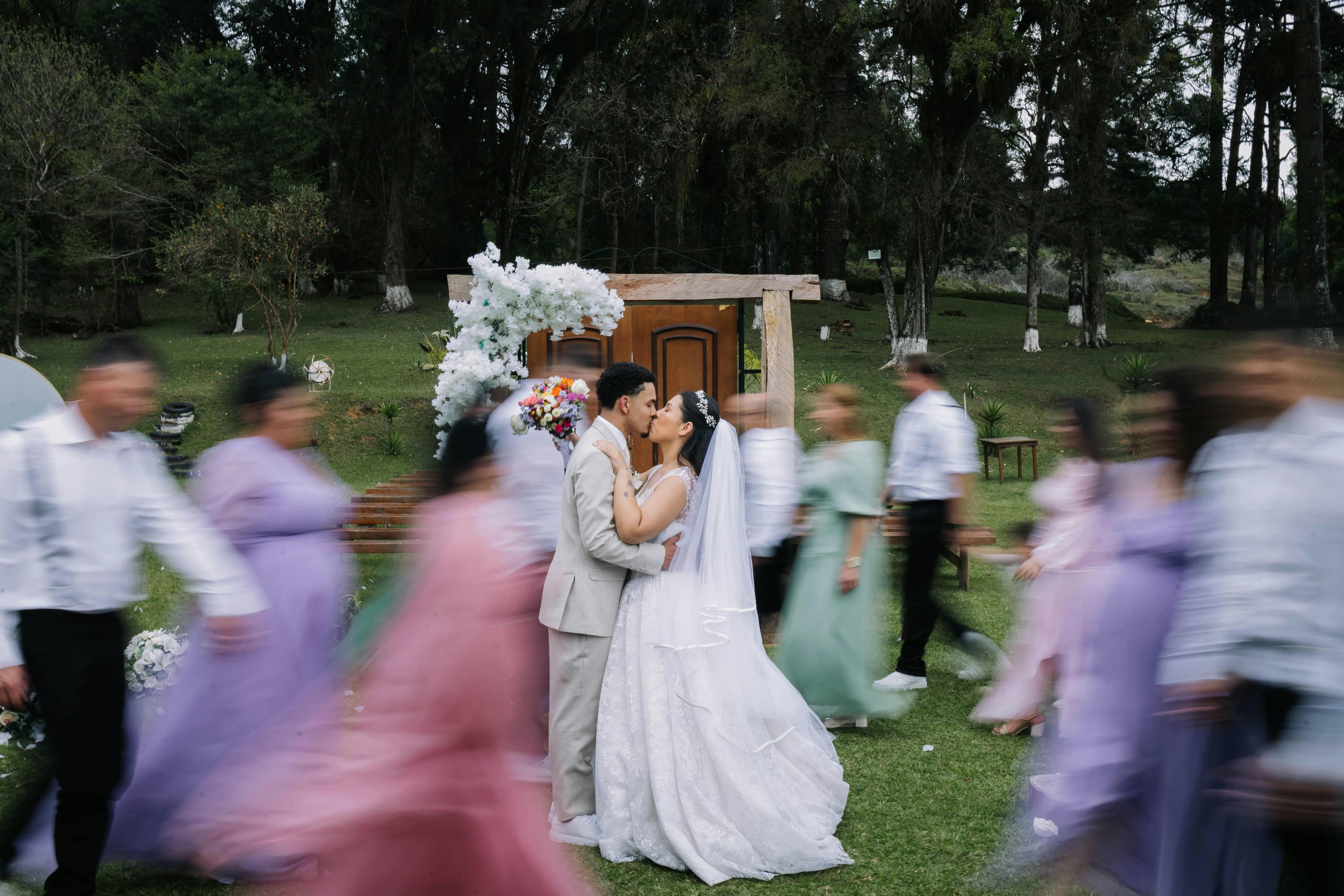
The dominant booking style for 2026 weddings is documentary or photojournalistic — a photographer who shadows the day rather than directing it. Google search data shows "documentary wedding photographer" growing 140% year-over-year in the US and UK, while "posed wedding photos" has declined. The shift reflects a generation of couples who grew up watching candid content: they want to look like themselves, not like a Vogue editorial.
What this means practically: expect your photographer to position you in good light but not direct your hands, expressions, or posture. During cocktail hour and reception, expect them to blend into the crowd rather than calling out groupings. The output looks messier in the editing stage but produces images that feel emotionally true.
If you want heavily directed portraits, be explicit with potential photographers during consultations. Many documentary photographers now offer a hybrid option: one 20-minute directed portrait session plus documentary coverage for the rest of the day.
3. Couples are building two-part photo archives: professional + guest
The most significant structural shift in 2026 wedding photography is the deliberate combination of professional coverage with a coordinated guest photo system. Couples who use QR code upload tools — where table cards and entrance signs include a scannable link for guests to upload directly from their phones — now routinely end their wedding with two distinct archives: the professional gallery (350–500 edited images delivered 4–8 weeks later) and the guest gallery (700–1,200 unedited photos available the same night).
Guest photos capture what professional photographers structurally cannot: reaction shots from the crowd during the first dance, behind-the-scenes moments from the bridal suite that weren't on the shot list, spontaneous photos from the dance floor at 11 p.m. when the photographer has packed up. Platforms like Snapeen make this seamless — guests scan a QR code with their phone camera and upload in under 30 seconds, no app required. The average Snapeen wedding collects 850 guest photos alongside the professional set.
Wedding photographers increasingly mention this in client consultations, recommending QR systems as a complementary tool rather than a competitor.
4. Drone and aerial photography is now standard, not premium
Drone footage has crossed from luxury add-on to expected deliverable for outdoor weddings. In 2025–2026, most mid-to-high-end wedding videographers include a drone as standard equipment. The shots couples request most: an aerial reveal of the venue before the ceremony, a birds-eye view of the ceremony layout with guests seated, and a sweeping exit shot.
For photography stills, drone use is growing primarily for outdoor ceremonies with dramatic landscapes — vineyard, barn, and beach weddings. The key regulations to know in the US: commercial drone use near populated areas requires FAA Part 107 certification — confirm your photographer or videographer holds this before assuming it's included.
Cost range: drone coverage as a standalone add-on runs $300–$800 for a half-day. Videography packages that include drone footage are typically priced $500–$1,000 higher than non-drone equivalents.
5. Live photo slideshows are becoming a reception staple
A live slideshow at the reception — where guest photos appear on a screen in real time as they're uploaded throughout the night — has moved from novelty to near-standard for 2026 weddings. The format creates a social feedback loop: guests see their own photos on the screen, cheer when they appear, and immediately upload more. Venues report that couples using a live slideshow alongside a QR code system collect 2–3× more guest photos than those with a QR code alone.
The setup is simpler than it sounds. Snapeen's Premium plan includes a live slideshow feature that runs in any browser and connects to a projector or screen via HDMI. Couples typically project it on a side wall during dinner and cocktail hour. The live slideshow has changed the atmosphere of receptions: guests pay attention to the screen the way they once watched a photo montage during the waltz, and candid shots get crowd reactions in real time.
6. Black and white editorial photography
Black and white has never fully left wedding photography, but in 2026 it's experiencing a sharper revival driven by a specific aesthetic: high-contrast editorial frames that look more like fashion photography than wedding snapshots. Photographers offering this style typically deliver a mixed gallery — 70–80% color, 20–30% designated black and white — rather than converting entire galleries to monochrome.
The black and white frames work best for specific moments: getting-ready portraits with strong window light, ceremony close-ups where color would distract from expression, and late-night dance floor shots with dramatic shadows. If this style appeals to you, ask to see portfolio photographers' black and white work specifically — it's a distinct skill from color editing and quality varies significantly.
7. Micro-wedding intimacy photography
Micro-weddings — ceremonies with 10–30 guests — grew out of necessity during 2020–2022 and have persisted as a deliberate choice in 2026. The photography that accompanies them is distinct: with fewer guests and a quieter pace, photographers go deeper rather than wider. The typical micro-wedding gallery contains 250–400 images with much higher emotional density than a 150-person event.
For couples considering a micro-wedding, photography pricing is typically $2,000–$3,500 compared to $3,500–$7,000 for full-scale events. The guest-to-photo ratio is dramatically higher, and every image feels personal rather than anonymous.
8. Golden hour portraits are non-negotiable
If there's one universal fixture of 2026 wedding timelines, it's the golden hour portrait session. Couples routinely build a 15–20 minute window into their reception — usually between dinner and speeches — to step outside with their photographer for the last hour of natural light. The results are reliably different from ceremony portraits: warmer tones, softer shadows, and a relaxed couple who's moved past the anxiety of the ceremony itself.
Timing varies by season and location. Use a golden hour calculator for your specific date and latitude — in June at most US venues, golden hour runs roughly 7:30–8:30 p.m. Build your portrait window to end 10 minutes before sunset for the warmest light.
9. Photo-film hybrid reels
Couples who want photography and videography but can't afford both are increasingly booking "photo-film" creators — videographers who deliver a 3–5 minute edited reel rather than a full-length documentary. The reel format is native to how couples actually share their wedding: on Instagram, in iMessage threads with family, as a recap for guests who couldn't attend.
Photo-film packages typically run $1,500–$3,000 and deliver within 4–6 weeks, covering ceremony walk, vows, first kiss, first dance, and speeches in 4K with licensed music. For couples who won't watch a 90-minute wedding film but would replay a 4-minute reel monthly for the next decade, it's the more practical option.
10. Second shooter coverage for weddings over 100 guests
The second shooter is no longer optional for weddings above 100 guests — it's a baseline expectation. The primary photographer covers ceremony and formal portraits while a second shooter simultaneously covers getting-ready moments, candid guest reactions, and angles the primary cannot physically occupy. Without a second shooter, there's a structural gap: during the processional, a single photographer must choose between shooting the couple's faces and shooting guest reactions — they cannot do both.
Most photographers include a second shooter in premium packages. If yours doesn't, ask the add-on price — typically $300–$700 for the day. For weddings above 150 guests, a third shooter for cocktail hour is worth considering.
What to expect to pay for wedding photography in 2026
US wedding photography in 2026 ranges from $2,500 to $8,000 for full-day coverage depending on market, experience level, and deliverables. The median booking price in major US cities is $4,200 for an 8-hour day, 500 edited images, and a second shooter. Rural markets run $1,800–$3,500 for comparable coverage. Destination weddings add $1,000–$3,000 in travel fees.
What to expect at each price point:
- $2,000–$3,000: Emerging photographers with strong portfolios, likely no second shooter, 350–400 edited images
- $3,000–$5,000: Mid-career photographers, second shooter typically included, 450–550 images, 12-month online gallery
- $5,000–$8,000: Established photographers with editorial-level work, second shooter standard, 500+ images, may include an engagement session
Film add-ons, drone coverage, and engagement sessions each add $300–$1,500 to any base package.
How to capture the photos your photographer will miss
Even the best wedding photographer misses things — not through negligence, but physics. One person cannot be in two rooms at once. The solution that's become standard in 2026: a guest photo system running in parallel. A QR code displayed on table cards, bar signage, and the entrance lets every guest upload their own shots to a shared gallery in real time, no app required.
Set up a Snapeen event before your wedding — it takes 2 minutes and the free plan costs nothing. On your wedding day, guests scan with their phone camera and upload directly from their camera roll. You receive every photo in a single gallery the same night, downloadable as a ZIP file. The average Snapeen wedding collects 850 guest photos — candid moments, reaction shots, and perspectives from every corner of the room that no single photographer could capture alone.
See also: Wedding photography statistics 2026 · How to collect wedding photos from guests · How many photos does a wedding have?
Frequently Asked Questions
Documentary or photojournalistic style is the dominant choice in 2026. Couples want authentic candid coverage rather than heavily directed posed portraits. Most photographers now offer a hybrid: one short directed portrait session (20–30 minutes) plus documentary coverage for the rest of the day.
If you want a warm, grain-textured aesthetic that is distinctly different from digital, yes. Film-hybrid photographers deliver 80–150 film frames alongside their digital gallery for $500–$1,500 more. Expect longer turnaround (6–12 weeks). Most couples say the film frames are the ones they end up printing most.
Most couples now use QR code photo systems — guests scan a code on table cards with their phone camera and upload directly through the browser, no app required. Snapeen is the most-used platform. The average wedding collects 850 guest photos this way, alongside 350–500 professional edited images.
The median full-day wedding photography price in major US cities is $4,200, covering 8 hours, a second shooter, and 500 edited images. Budget photographers run $2,000–$3,000; premium photographers run $5,000–$8,000. Film coverage, drone, or engagement sessions each add $300–$1,500.
A live slideshow displays guest-uploaded photos on a projector screen in real time during the reception. As guests scan a QR code and upload, their photos appear within seconds. Couples using a live slideshow alongside a QR code system collect 2–3× more guest photos. Snapeen's Premium plan includes this feature.
Topics

Written by
Emily Chen
Helping couples and event planners capture every precious moment with modern QR code photo sharing technology.
Ready to collect your event photos?
Set up your QR code in 2 minutes. Guests scan and upload instantly — no app needed.