Wedding Photo Album Ideas: How to Create One You'll Actually Look At
61% of couples never print a single wedding photo. Here are 8 specific album formats — from printed books to digital displays — and exactly how to create each one.

Quick Answer
61% of couples never print a wedding photo. The fix is choosing a format before the photos arrive and booking time in your calendar. Best formats: a lay-flat hardcover book ($120–300), a guest photo book from QR code uploads ($25–40), a digital display frame ($100–180), or a single large-format wall print ($50–150). Create it within the first 3 months.
Why most couples never create a wedding album (and how to fix it)
Sixty-one percent of couples have not printed a single wedding photo one year after their wedding, according to repeated wedding industry surveys. The reason is not that couples don't care — it is that creating an album feels like a large project that gets deferred until the urgency fades. The photos sit in a gallery link, the honeymoon happens, normal life resumes, and suddenly it is Christmas and the gallery is still untouched. The solution is a deadline and a format decision made in advance. If you choose the album format before your wedding photos arrive and block time in your calendar during the first month post-wedding, you will be in the 39% of couples who actually create something physical. This guide covers 8 specific formats with concrete recommendations for each.
Format 1: The premium hardcover photo book
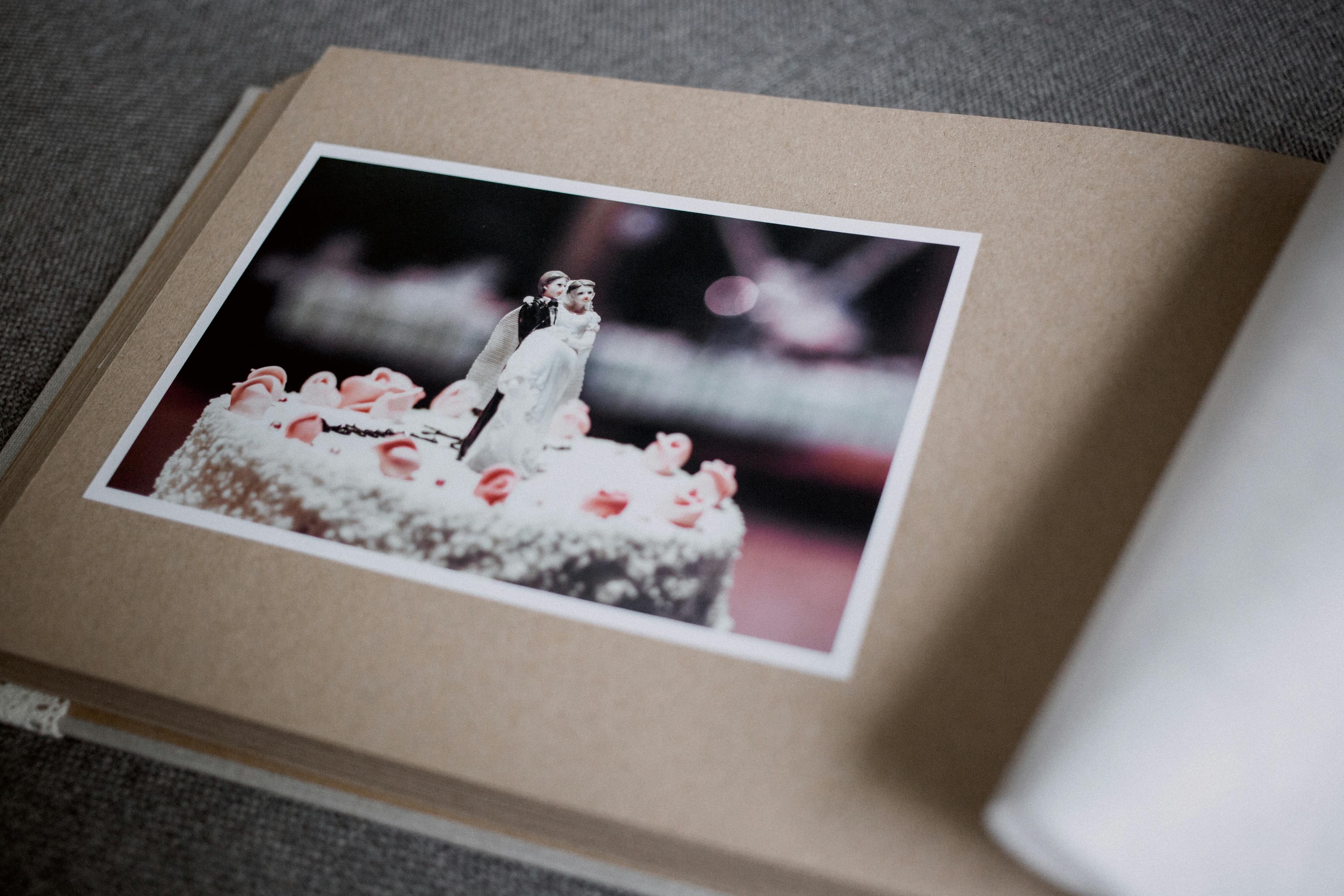
A hardcover photo book is the classic wedding album — 20–80 pages of professional-quality prints bound in a lay-flat cover. Services like Artifact Uprising, Chatbooks Premium, and Minted offer lay-flat books where photos span across the gutter without interruption. The process: select 60–100 photos from your professional gallery (a mix of ceremony, portraits, reception details, and candid moments), use the service's design tool to lay out spreads, and order. Lay-flat hardcover books typically cost $120–300 depending on page count and paper quality. They arrive in 10–14 business days. Order two identical copies at checkout — giving one to each set of parents eliminates the "we never got a copy" conversation at Christmas. The best layout principle: let portrait spreads breathe with one or two large photos per page, and use grid layouts for candid reception moments where the collection effect matters more than any individual image.
Format 2: The guest photo book
Guest photos from a QR code collection tell a different story than professional photos — more candid, more diverse in perspective, more human. Creating a book specifically from guest photos captures the wedding from every table, every corner, every unexpected angle. The format works best as a companion to the professional album rather than a replacement. Select 40–60 guest photos that include faces, genuine emotion, and moments the professional photographer wasn't in position to capture — reactions during speeches, dancing at midnight, children under tables, friends catching up in the garden. Chatbooks and Chatbooks Standard (from $10 for 30-page softcover) are the most affordable options. A 60-image guest photo book in softcover runs $25–40 and takes under an hour to create if your photos are already organized.
Format 3: The digital display frame
A digital photo frame displays a rotating slideshow of your wedding photos on your wall or shelf, continuously cycling through favorites without requiring any action from you after the initial setup. Frames from Aura (from $149), Nixplay ($100–180), or Google Nest Hub ($100) are well-reviewed and support galleries of 100–500+ photos. The setup process: download your favorites from the gallery, upload to the frame's app, and select which photos to display. Some frames allow family members to add photos remotely — useful if you want grandparents to be able to see updates or contribute their own photos over time. For wedding photos specifically, the digital frame format works well for couples who know they will not sit down to design a printed album but want to see their photos daily. It takes 20 minutes to set up and then runs indefinitely.
Format 4: The anniversary print calendar
A photo calendar is a time-limited album that makes photos functional — displayed on a wall for 12 months before cycling out naturally. Services like Snapfish, Shutterfly, and Zola offer wall calendars where each month features a different photo. For wedding photos, assign the key moments chronologically: the ceremony for the wedding month, first dance for the anniversary month, portraits for the honeymoon month, and candid guest shots for the remaining months. A 12-month wall calendar costs $15–30 and arrives in 5–7 business days. Order in October or November if you want to start in January. The calendar format is particularly well received as a gift for parents — a functional item they will actually use and see daily throughout the year.
Format 5: Large-format wall prints
One or two large-format prints on the wall are often more impactful than an album that lives on a coffee table. A 20×24 inch fine art print from your professional photographer's gallery — the first dance, a ceremony exit portrait, or a candid that captures you both genuinely happy — costs $50–150 depending on the service and material. Canvas wraps are the most forgiving of slight imperfections in composition; framed prints with a mat are more formal. For the living room, the first-dance photograph or a wide ceremony shot works well at scale. For a bedroom, an intimate portrait moment at a quieter, smaller size (11×14) reads more naturally. Order directly from your photographer if they offer prints, or download the high-resolution JPEG and use a service like Nations Photo Lab or Bay Photo.
Format 6: The guest book album
A wedding guest book album serves double duty — guests write messages in it during the reception and the couple keeps it as a combined photo-and-message keepsake. You can create these in advance using a service like Artifact Uprising's Guest Book product or through Etsy sellers who offer custom binding. The format: print 40–60 photos of you as a couple (engagement photos, getting-ready shots, ceremony portraits) and bind them into a book with blank pages between spreads for guest signatures. Guests write next to the photos of you at the reception. After the wedding, the book is already complete and requires no additional project to finish. The downside is cost — custom guest book albums run $80–200 — and the logistics of having it ready before the wedding. Plan for a 3–4 week lead time.
Format 7: The highlight video compilation
If you hired a videographer, your wedding highlight video (typically 4–8 minutes edited from hours of footage) is its own album format — a moving record of the day with music, voices, and ambient sound. If you did not hire a videographer, you may still have video footage from guests' phones uploaded through Snapeen. A simple DIY compilation: download all guest videos from your gallery, import into iMovie or CapCut (free apps), trim each clip to 5–15 seconds, arrange chronologically, add a song, and export. This takes 2–3 hours and produces a 3–5 minute video that captures the energy of the day in a way photos cannot. Upload to a private YouTube or Vimeo link to share with family without compression.
Format 8: The annual anniversary print
Instead of creating a complete album immediately, some couples create a single large print each year on their anniversary — a rotating tradition that builds into a collection over time. The discipline is low (one decision per year), the cost is low ($30–50 per print), and the result after 5 or 10 years is a more curated record than a single rushed album created in the weeks after the wedding. Year one: the ceremony exit. Year two: the first dance, in hindsight the photo you wish you'd displayed earlier. Year three: a candid guest photo that captures something the official photography missed. The annual approach suits couples who want something lasting but find large creative projects hard to complete under time pressure.
See also: How to share wedding photos with family · How to collect guest wedding photos with a QR code · How to avoid losing wedding photos
Frequently Asked Questions
Artifact Uprising is widely considered the premium option for lay-flat hardcover books ($150–300). Chatbooks offers the best value for softcover books starting at $10. Minted sits in the middle with high-quality paper and professional design templates. For guest photo books specifically, Chatbooks Standard is the most affordable option at $25–40 for a 60-image book.
A typical wedding photo album contains 60–100 images for a 20–30 page layout. Lay-flat books look best with 2–4 photos per spread. Select a mix: 30% ceremony, 30% portraits (couple + family), 20% reception details, and 20% candid guest moments. Avoid including more than 5 photos that are compositionally similar — variety in subject matter and scale keeps the book engaging.
Designing a 20–30 page photo book takes 1–3 hours using a drag-and-drop service like Artifact Uprising or Chatbooks. Printing and delivery adds 5–14 business days depending on the service. Most couples report that the hardest part is selecting which photos to include — deciding in advance on a format and page count makes the selection process faster.
Yes, and they are often the most emotionally resonant pages. Guest photos from a QR code collection show candid moments, genuine reactions, and perspectives the professional photographer couldn't capture. A mixed album — professional portraits for the formal sections, guest photos for the reception candid spreads — creates a more complete record of the day.
Topics

Written by
Emily Chen
Helping couples and event planners capture every precious moment with modern QR code photo sharing technology.
Ready to collect your event photos?
Set up your QR code in 2 minutes. Guests scan and upload instantly — no app needed.
Continue Reading
Related Articles
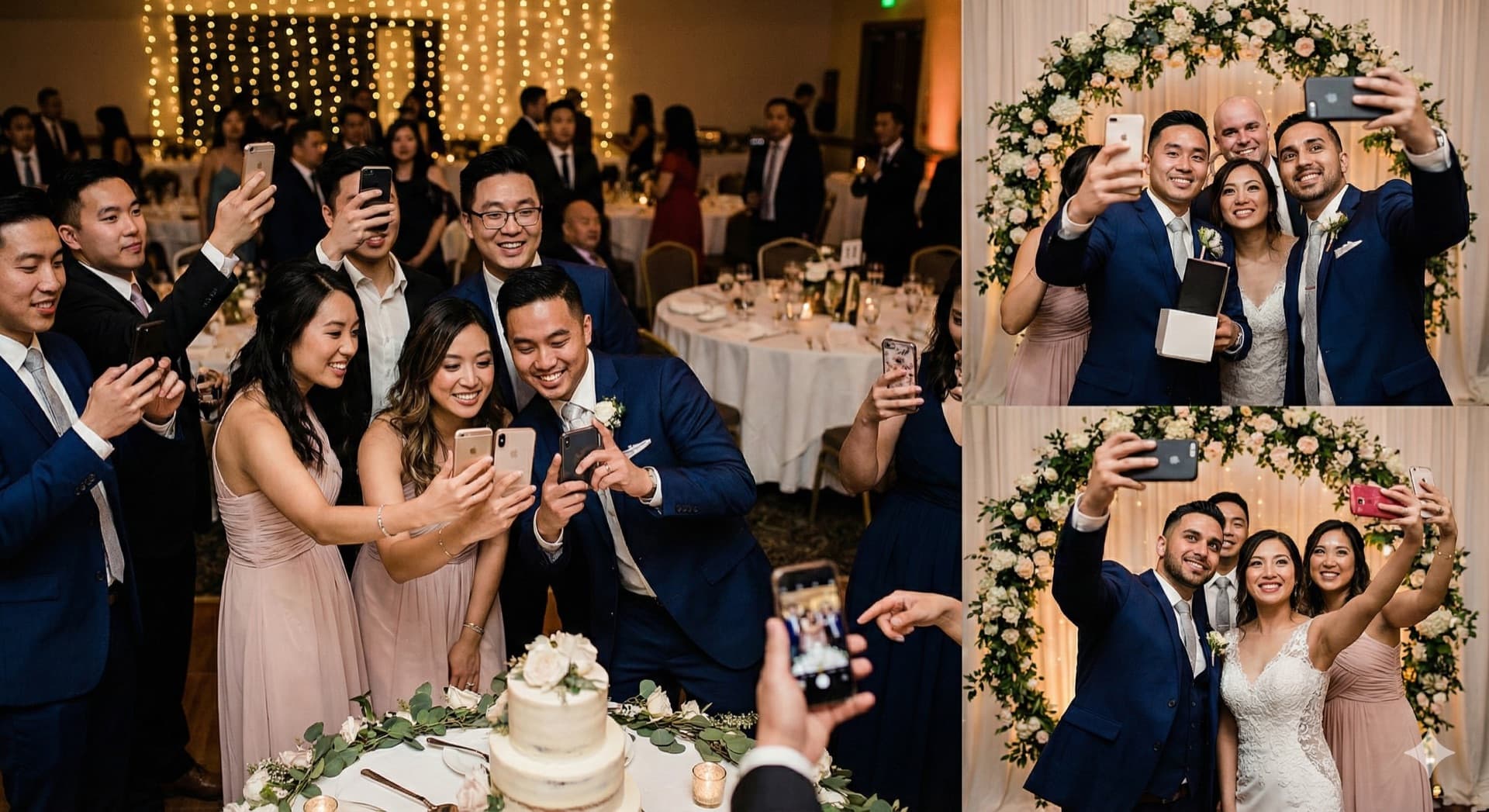
How to Collect Wedding Photos from Guests: 5 Methods Compared (2026)
The easiest way to collect wedding photos from guests is a QR code that opens an upload page in their phone browser. Here is how it compares with shared albums, group chats, hashtags and disposable cameras, and the three things that decide how many photos you actually get.

10 Ways Couples Lose Wedding Photos (And How to Prevent It)
Don't let precious memories disappear! Learn the most common ways couples lose wedding photos and simple solutions to protect them.

10 Creative Ways to Display a QR Code at Your Wedding (More Uploads)
Where you display your wedding QR code decides how many guest photos you collect. Ten placements ranked, with the size, wording and print tips for each: table cards, welcome sign, program, bar, live wall and five more.