Disposable Cameras at Weddings: Do They Still Work in 2026?
Disposable cameras at weddings are having a comeback — but the reality of development costs, lost cameras, and unusable photos is different from the aesthetic. Here's an honest look at what they actually deliver and when they're worth it.

Quick Answer
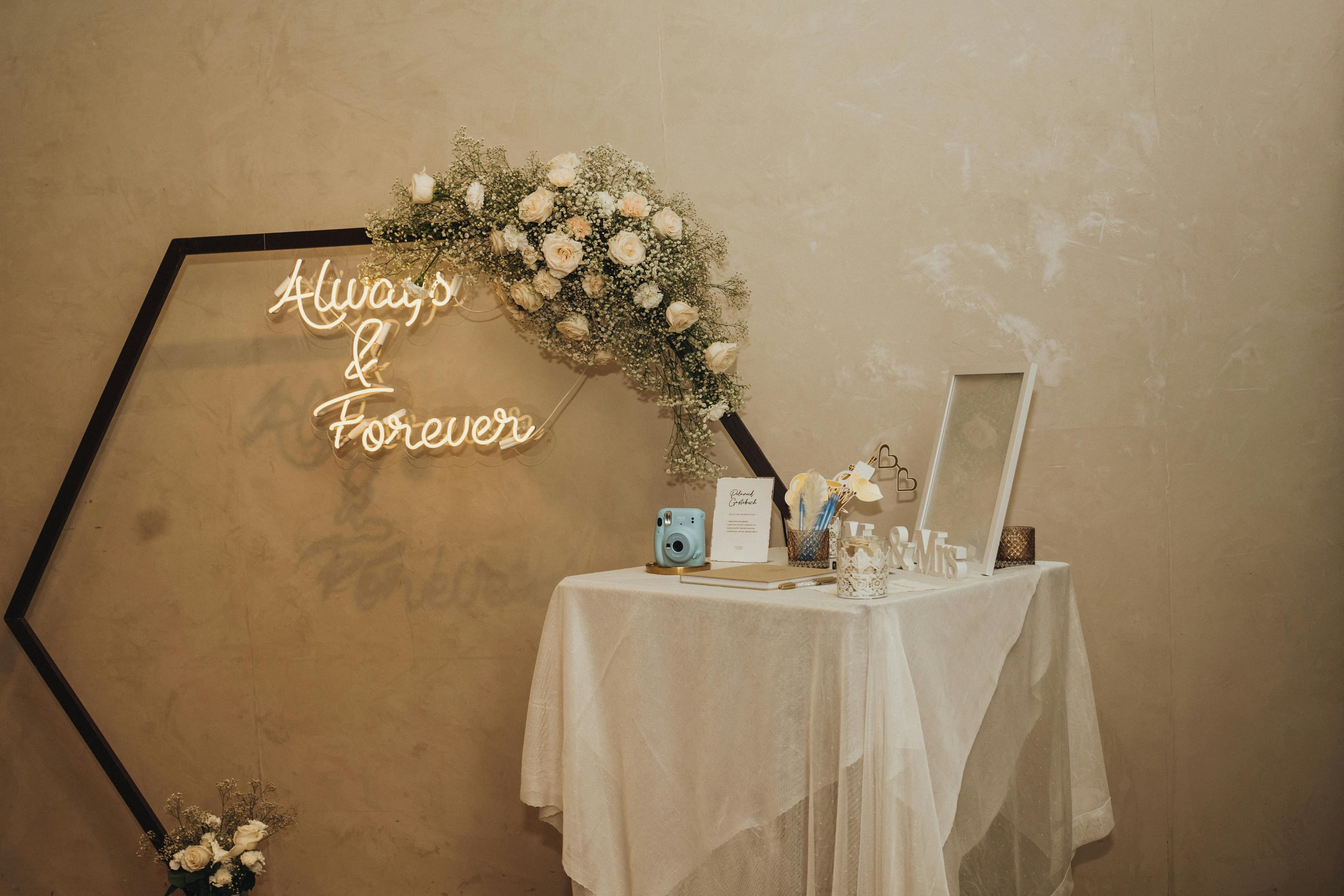
Disposable cameras at weddings cost $30–50 per camera once you factor in development, deliver usable photos from about 50% of frames, and take 1–3 weeks to return. They work well at outdoor or well-lit cocktail hours; they struggle indoors. Most couples end up happiest with a hybrid: disposable cameras during cocktail hour and ceremony, QR code collection during the reception.
Why disposable cameras at weddings are trending again
Film photography never fully disappeared, but something shifted in the last three years. Couples who grew up with Instagram are actively seeking the imperfect, grainy, slightly-overexposed aesthetic that only film produces. Disposable cameras have become both a décor element and a guest experience — small boxes of Kodak or Fujifilm on every table, a paper sign saying "Capture our day," and the romantic idea that guests will return 27 frames of candid magic.
The reality is more complicated. Disposable cameras at weddings work beautifully in some contexts and produce expensive, disappointing results in others. This guide covers both sides honestly: what you actually get, what it actually costs, and the hybrid approach that most couples end up preferring after thinking it through.
What you actually get from disposable cameras at a wedding
A single-use disposable camera has 27 exposures. It has no flash control, fixed focus, and a plastic lens designed for outdoor daylight conditions. What this produces:
What works well:
- Outdoor daylight shots with natural light — these are genuinely beautiful, with warm grain and the slightly soft focus that gives film its character
- Candid moments that guests capture because they have a physical object in their hands, not a phone (the act of picking up a camera prompts photos that would never happen with a phone)
- The aesthetic: the imperfect framing, the occasional double exposure, the grain — these are not bugs, they're the product
What doesn't work well:
- Indoor receptions with low or colored lighting — the built-in flash on disposable cameras is weak and produces harsh, flat light from 8 feet away
- Fast-moving subjects (the first dance, kids on the dance floor) — film doesn't handle motion blur the way a phone camera does
- Group shots of more than 5–6 people — most guests aren't experienced with framing and the fixed lens produces groups where people at the edges are partially cut off
The results are unpredictable. At any given wedding, roughly 40–50% of disposable camera frames are usable. The rest are blurry, over- or under-exposed, or show the back of someone's head because the guest didn't frame the shot. This is part of the charm for some couples and deeply frustrating for others.
The real cost breakdown
Disposable cameras are often described as "cheap" — and the unit cost is low. The full cost, once you factor in development, is higher than most couples anticipate.
Per camera:
- Kodak FunSaver (27 exposures): $14–18 from Amazon or a camera shop
- Fujifilm QuickSnap (27 exposures): $12–16
Development:
- Standard development and digital scan: $18–25 per roll at a local lab
- Same-day development (if available in your city): $30–40 per roll
- Mail-in development services (The Darkroom, Mpix): $20–30 per roll, 1–3 week turnaround
Total per camera: $30–50 for the camera and development together. For a 150-person wedding where you put out 20 cameras, that's $600–$1,000 in camera and development costs alone.
The hidden costs:
- Lost cameras. At every wedding, 20–30% of disposable cameras are taken home by guests as a souvenir, left at the venue, or simply forgotten. Budget for 25% loss.
- Unusable rolls. Cameras left in direct sunlight, dropped in a drink, or stored incorrectly produce partially or fully exposed rolls that development can't recover.
- Turnaround time. If you use a local lab, you might have your scans within a week. If you use a mail-in service, allow 2–3 weeks. You won't see these photos for your anniversary post or thank-you card if you're on a tight timeline.
How many disposable cameras do you need?
The standard advice is one camera per table. That's a reasonable starting point but needs adjustment based on your reception format:
| Wedding size | Tables | Cameras recommended | Budget estimate |
|---|---|---|---|
| 50 guests | 5–6 tables | 6–8 cameras | $240–400 |
| 100 guests | 10–12 tables | 12–15 cameras | $480–750 |
| 150 guests | 14–18 tables | 18–22 cameras | $720–1,100 |
| 200 guests | 18–24 tables | 22–28 cameras | $880–1,400 |
Add 20–25% to your camera count to account for loss.
For outdoor ceremonies in good light, also place 2–3 cameras at the ceremony entrance or in a basket near the aisle. Ceremony photos from guests' perspectives are among the most valued results from disposable cameras.
Tips that actually improve results
If you decide to use disposable cameras, these practical steps significantly improve the quality and quantity of usable photos:
Brief your tables. Include a small handwritten or printed note with each camera: "Wind the film forward after each shot (the wheel on top). Hold the camera steady. Try not to shoot directly at the sun." Most guests haven't used a disposable camera in 10+ years.
Collect cameras before guests leave. Assign a bridesmaid, groomsman, or coordinator to collect cameras from tables before the reception ends. Don't rely on guests to turn them in at an unmanned collection basket — you'll lose 30–40% of them.
Choose a development service in advance. Don't show up to a random drugstore. Walgreens and CVS still develop film but the quality of scans is inconsistent. Choose a dedicated lab: The Darkroom (mail-in, strong reputation), Indie Film Lab (mail-in, color-accurate scans), or a local specialist.
Request high-resolution scans. Most development services offer standard (1,500×1,000 px) or high-resolution (3,600×2,400 px) scans. Always order high-resolution — you'll want to print some of these.
Use cameras at cocktail hour, not just dinner. Cocktail hour has natural mingling energy, often outdoor or well-lit space, and guests who haven't yet sat down. This is the best window for good disposable camera results. Table cameras during dinner and dancing supplement the cocktail hour haul.
The downsides couples don't anticipate
The wait. Digital photos feel immediate. Film doesn't. You'll return from your honeymoon and wait another week (or three) for development. If you want to share photos at your one-month anniversary or send thank-you cards with a photo, disposable cameras may not deliver in time.
No ability to edit or moderate. With digital guest photos, you can download the gallery, remove duplicates and blurry shots, and share a curated collection. Film development gives you everything — including the unflattering moments, the accidental shots of the ceiling, and the photos guests took of their own shoes. You can select which scans to print, but you can't un-develop a roll.
The flash problem. The built-in flash on most disposable cameras has a range of about 4–8 feet. At a dimly lit reception, anything beyond that range is underexposed. Most indoor reception photos taken with disposables from across a table come out too dark. If your reception is in a dark venue, expect significant photo loss from this alone.
No backup. If a camera is damaged, exposed, or lost, those 27 frames are gone. There's no cloud backup, no safety net.
Disposable cameras vs. digital photo collection
| Factor | Disposable cameras | QR code (Snapeen) |
|---|---|---|
| Cost (150-person wedding) | $720–1,100 | $24.99–$49.99 |
| Photo quality | Variable, film grain | Full smartphone resolution |
| Photos delivered | ~400–600 (if all developed) | 800–1,500 typical |
| Turnaround | 1–3 weeks after event | Real-time, during event |
| Guest friction | Pick up camera, take photos | Scan QR, tap upload |
| Aesthetic | Analog, warm, grainy | Crisp digital |
| Recovery from lost media | None | Cloud-backed |
| Works indoors (low light) | Poorly | Yes |
The comparison isn't really about which is "better" — they produce fundamentally different results. Disposable cameras produce analog photos with a specific aesthetic that some couples specifically want. Digital collection produces volume, quality, and immediacy that disposables can't match.
The hybrid approach: how most couples use both
Many couples who think carefully about this end up using both: disposable cameras at cocktail hour and the ceremony, where the light is good and the analog aesthetic shines, plus a QR code for the reception, where volume, low-light performance, and instant access matter more.
Hybrid setup:
- 8–10 disposable cameras at cocktail hour (outdoor or bright indoor space)
- 2–3 cameras at the ceremony entrance
- QR code table cards and bar signs for the reception
- DJ announcement at dinner directing guests to the QR code
This approach costs $280–450 in camera and development costs (far less than equipping every dinner table), and it captures the authentic film moments from the bright parts of the day while using digital collection for the darker, faster-moving reception portion.
When disposable cameras are the right choice
Disposable cameras are the right choice when:
- Your reception has natural light. An outdoor daytime wedding or a venue with large windows will produce consistently good film results. Low-light evening receptions are the worst use case.
- The aesthetic matters more than the quantity. If you specifically want the film look and don't need 1,000 guest photos, disposable cameras deliver exactly what you want.
- You have a small guest list (50 or under). The cost and collection logistics are manageable at small scale. At 200 guests, you're looking at $1,000+ in cameras and development with no guarantee of results.
- You have a dedicated person to collect cameras. Without this, you'll lose 30–40% of cameras to guests pocketing them as souvenirs or the venue discarding them during cleanup.
If none of these apply — large wedding, evening indoor reception, no collection coordinator — a QR code system will produce better results at a fraction of the cost.
See also: Disposable camera app for weddings: the no-app alternative · Best Wedding Photo Apps 2026 (Ranked & Reviewed) · How to Collect Wedding Photos from Guests · Wedding Photo App vs WhatsApp Group · 10 Creative Ways to Display a QR Code at Your Wedding
Frequently Asked Questions
They work well in specific conditions: outdoor or bright indoor spaces, smaller weddings (under 100 guests), and when the analog aesthetic is a priority over volume or quality. For large indoor evening receptions, the built-in flash is too weak, photo loss rates are high, and development costs add up quickly. A hybrid approach — disposable cameras at cocktail hour plus a QR code for the reception — captures the film aesthetic without relying on it for your core photo collection.
The camera itself costs $12–18. Development and digital scanning costs $18–30 per roll. Total per camera: $30–50. For a 150-person wedding with 20 cameras, budget $720–1,100 — and add 25% for cameras that get lost or damaged. Compare this to $24.99–$49.99 for a digital QR code collection platform that produces more photos at full smartphone resolution.
The standard recommendation is one camera per table plus a few at the ceremony entrance. For a 100-person wedding with 10 tables, plan for 12–15 cameras (including extras for loss). For 150 guests, 18–22 cameras. Always over-order by 20–25% to account for cameras taken home by guests or lost during cleanup.
The Kodak FunSaver is the most widely available option and produces warm, slightly overexposed film tones that most couples find flattering. The Fujifilm QuickSnap produces slightly cooler, sharper results and performs marginally better in low light. For outdoor daytime weddings, either works well. For indoor receptions, neither performs reliably — consider this the primary limitation of disposable cameras at weddings.
A simple note or tag works well: "Capture our day — [Names], [Date]." Include brief instructions on the same card: wind the film after each shot, press the flash button before indoor photos, and leave the camera on the table at the end of the night. Without instructions, many guests won't know how to advance the film or activate the flash, and you'll lose photos that were technically taken but never captured.
Topics

Written by
Sarah Johnson
Helping couples and event planners capture every precious moment with modern QR code photo sharing technology.
Ready to collect your event photos?
Set up your QR code in 2 minutes. Guests scan and upload instantly — no app needed.
Continue Reading
Related Articles

How to Collect Photos from 200+ Wedding Guests
Large guest lists create a photo collection problem that small weddings don't have. Here's the exact system — placements, scripts, follow-ups — that gets 60%+ participation when you're working with 200 or more people.
What to Do with Wedding Photos After the Wedding: A Step-by-Step Guide
Your professional gallery arrives, your guest photos are scattered across phones, and suddenly it's been six months and nothing has been backed up, sorted, or printed. Here's the exact order to handle wedding photos after the big day.