Unplugged Wedding: What It Is, Why Couples Choose It, and How to Make It Work
An unplugged wedding means asking guests to put their phones away during the ceremony. Here's everything you need to know — the wording, the signs, when to enforce it, and how to still get great candid photos from guests.

Quick Answer
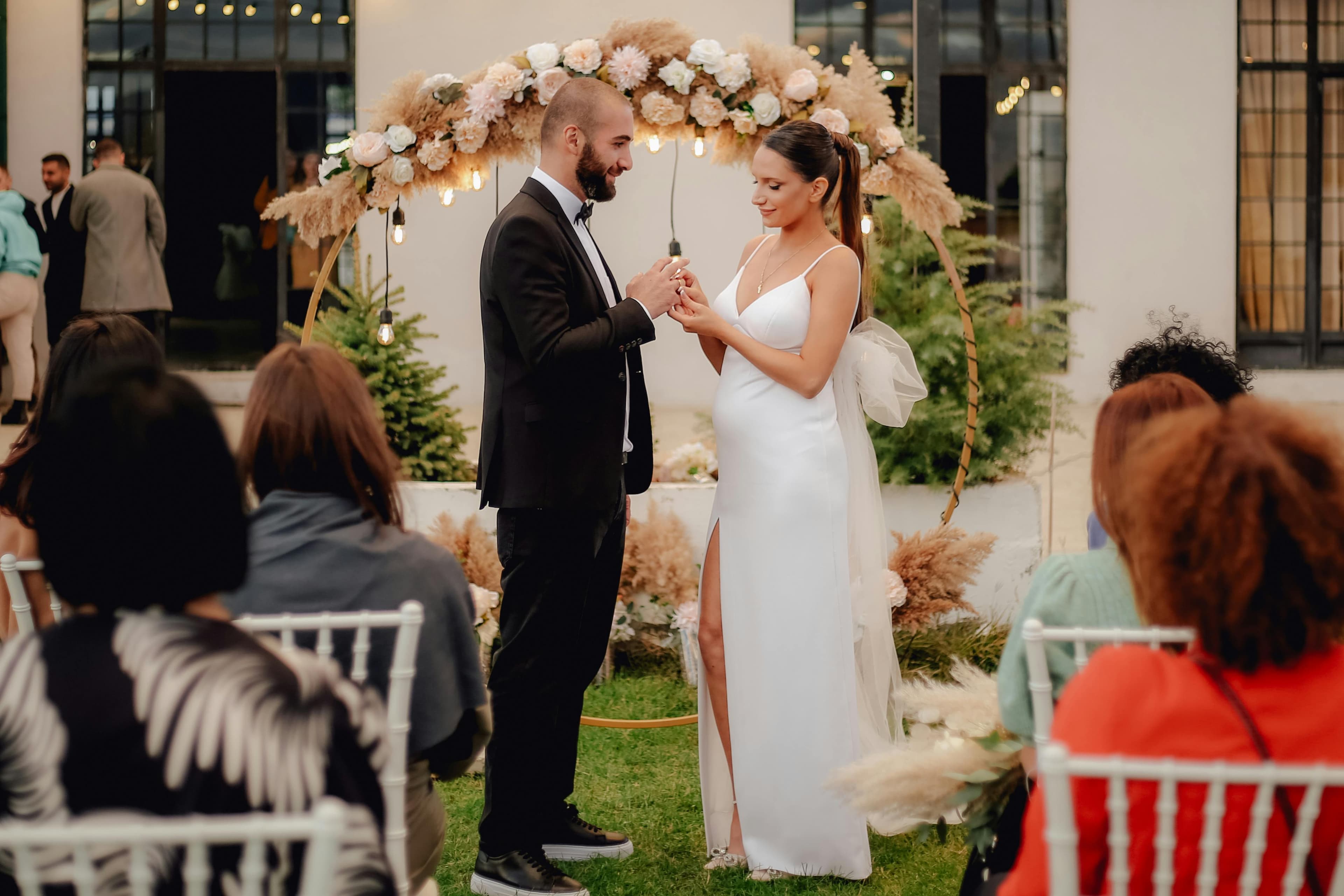
An unplugged wedding asks guests to put phones away during the ceremony — not the whole day. Announce it on your website, with a sign at the entrance, and through the officiant before the processional. It gives your photographer cleaner shots and guests fuller presence. Keep the reception open and pair it with a QR code so you still collect hundreds of candid guest photos.
What is an unplugged wedding?
An unplugged wedding is a ceremony where guests are asked to put away their phones, tablets, and cameras and simply be present. No photographs, no Instagram Stories, no live-streaming — just the moment as it happens. The term "unplugged" entered wedding culture around 2012 and has grown steadily since. A 2024 survey of 1,200 couples found that 38% had an at least partially unplugged ceremony, up from 9% in 2015.
"Unplugged" almost always refers to the ceremony only. The reception — cocktail hour, dinner, dancing — is typically fair game for phones and cameras. The goal is to protect the specific 20–60 minutes of the ceremony from being filtered through screens.
Why couples choose an unplugged ceremony
The reasons fall into two categories: aesthetics and experience.
Aesthetics: A professional photographer has one shot at each moment — the first look as you walk down the aisle, your partner's expression when they see you, the ring exchange. When guests hold up phones and iPads, the photographer has to shoot around them. The official photos end up with arms, screens, and camera flashes in the background. Some shots become unusable entirely. Photographers report that unplugged ceremonies produce noticeably cleaner, more emotional images.
Experience: Guests who are photographing a moment are not fully in it. They're managing a device — checking the framing, worrying about storage space, deciding whether to shoot video or still. Research on "cognitive offloading" (the tendency to rely on a device to remember something so you don't have to) suggests that photographing an experience can reduce how well people encode the memory. An unplugged ceremony asks guests to actually witness the moment rather than document it.
There's also a more personal reason: many couples don't want their ceremony on Instagram before they've even left the venue. An image posted by a guest (sometimes captioned poorly, sometimes showing an unflattering angle) can appear online before the professional photos are delivered — and can't be taken back.
How to announce an unplugged ceremony
The announcement needs to happen at three points: before guests arrive, as they're seated, and at the start of the ceremony. Relying on any one of these alone leaves gaps.
Before the wedding
Your wedding website is the right place for a full explanation — one short paragraph is enough. If you use a guest-guide builder such as WeddTap, put it on the same page as the schedule, so guests read it when they look up the ceremony time. Something like:
"We've chosen to have an unplugged ceremony. We'd love for you to be fully present with us for this part of the day. Our photographer will capture everything beautifully, and we'll share photos with you afterward. Phones and cameras away during the ceremony — thank you!"
Your invitations or order of service can include a shorter note:
"Unplugged ceremony — please keep phones and cameras put away. Photos shared after."
At the venue
A sign at the ceremony entrance is the most common and effective reminder. Guests see it as they're walking in, when they're already in the mindset of arriving and settling. Standard sizes are 18×24 inches for a freestanding sign or A5 for a card on each chair. The wording should be warm, not scolding.
Example sign copy:
"Welcome — and thank you for being here. We kindly ask that you keep phones and cameras put away during our ceremony. Our photographer has it covered. Please be present with us. We can't wait to share photos with you soon."
Cards on chairs work well for outdoor ceremonies or venues where guests arrive scattered — some miss the entrance sign. A small card on each chair or in the ceremony program ensures every guest sees the request.
During the ceremony: the officiant announcement
This is the most important step. An officiant announcement 30–60 seconds before the processional begins reaches every seated guest at the exact moment they're about to reach for their phones. Ask your officiant to say something like:
"Before we begin, [couple's names] would like to ask for your full presence during this ceremony. Please silence your phones and tuck them away — no photos or video. Their photographer is here to capture every moment. The greatest gift you can give them today is being fully present. Thank you."
The tone matters. Warm and gracious works much better than "phones away" with no explanation. When guests understand the why — protecting the photographer's shots, protecting the experience — they comply readily.
What if a guest ignores the request?
It happens at almost every unplugged wedding. A guest gets excited, forgets, or simply doesn't think the rule applies to them.
The best approach is to design the ceremony so that the officiant can gently redirect without embarrassing anyone. A second, softer reminder mid-ceremony ("and if your phone is still out — now's a great time to put it away") catches late violators without calling anyone out by name. Some couples ask an usher to quietly approach a repeat offender with a card that says "phones away, please" — low-drama, effective.
What you shouldn't do is stop the ceremony or make a scene. The goal is presence, not enforcement. One guest with a phone out matters much less than the couple making an announcement that disrupts the flow for everyone.
Partial unplugged: ceremony only
Most couples who go unplugged choose to apply the request only to the ceremony — roughly defined as from the processional to the recessional. Everything before (guests arriving, cocktail hour pre-ceremony) and everything after (cocktail hour, reception, dancing) is open.
This is the right default. It targets the high-stakes moments where phones cause the most interference — the walk down the aisle, the vows, the first kiss — without making guests feel monitored all day.
Some couples extend the unplugged request to the first dance or the father-daughter dance, since those are similarly once-in-a-lifetime shots where guest phones can create clutter in official photos. Beyond that, the reception is typically not the right place for phone restrictions.
Unplugged wedding signs: wording ideas
Here are five sign variations, from formal to casual:
Formal:
"We invite you to be fully present as witnesses to our union. Kindly put phones and cameras away during the ceremony. Photography and video by [Photographer Name]."
Warm:
"Unplugged ceremony. Please keep phones put away and hearts open. We'll share our photos with you as soon as they're ready."
Direct:
"No phones during the ceremony, please. Our photographer has it covered — promise."
Playful:
"We're getting married — not Instagrammed. Phones away for the ceremony, please. 📷 Our photographer is on it."
Brief:
"Please be present. Phones away during the ceremony. Thank you."
Match the tone to your wedding. A formal black-tie wedding warrants different wording than a barefoot beach ceremony.
What about guest photos at the reception?
An unplugged ceremony doesn't mean no guest photos — it means no guest photos during the ceremony. The reception is when candid guest photography matters most: reaction shots during speeches, dance floor moments, the late-night energy that professional photographers can't be everywhere to catch.
The best practice is to make the transition explicit. As guests move from the ceremony to cocktail hour, let them know phones are welcome again. Some couples have their officiant end the ceremony with something like: "The ceremony is over — phones back out! And please share your photos with us using the QR code you'll find on your table card at dinner."
That last part matters: a QR code for guest photo collection ensures that the candid reception photos don't stay scattered across 120 different camera rolls. Guests scan the code during the reception, upload photos through the browser in under 30 seconds, and everything lands in one gallery in original quality. Couples using this system typically add 100 to 350 guest photos, moments the professional photographer couldn't cover.
Set up your Snapeen QR code before the wedding and print it on your table cards. Keep the ceremony sacred and device-free; let the reception be fully captured.
Do photographers prefer unplugged ceremonies?
Almost universally, yes. Wedding photographers consistently name unplugged ceremonies among the most impactful decisions a couple can make for the quality of their photos. The reasons are practical:
- No devices in backgrounds. Phones and iPads create visual clutter that can't be removed in editing.
- No light interference. Flash from a guest camera fires exactly when the professional photographer fires — washing out expressions and ruining exposure.
- No blocked sight lines. A guest standing in the aisle to get a photo can physically obstruct the photographer's access to the couple.
- More emotional shots. When guests aren't managing devices, their faces are more open and expressive — which creates better reaction shots.
If you're on the fence, ask your photographer directly. Most will advocate strongly for at least a partially unplugged ceremony.
Common objections — and honest answers
"Our guests will be upset." Most guests are relieved. Being given explicit permission to put the phone away removes the social pressure to document the moment. The guests who are most likely to violate the request are the ones who would have taken low-quality, backseat-of-the-ceremony photos anyway.
"What if our photographer misses something?" A professional wedding photographer who has been briefed on your shot list, timeline, and key moments will not miss the shots that matter. That's what you're paying them for. Guest photos supplement the professional gallery — they don't replace it.
"We want grandma to be able to take a photo." This is a legitimate concern. Some couples carve out an exception: a designated photo moment at the end of the ceremony where guests can take a few photos of the couple before the recessional. Others let it go — grandma's blurry iPhone photo from row 12 is a nice memory for her, not a great image for you.
"We'll miss the candid photos from guests." You won't miss them — you'll get more. Directing guest photography to the reception (where phones are welcome) and providing a structured way to collect those photos produces far more candid images than having guests half-distracted during the ceremony trying to photograph both.
The short version
An unplugged ceremony protects your professional photos, gives guests permission to be fully present, and keeps your wedding off Instagram before you're ready to share it. It applies to the ceremony only — the reception remains open. The announcement works best at three points: your wedding website, a sign at the entrance, and an officiant statement before the processional. Then at the reception, hand guests a QR code and watch the candid photos roll in.
See also: How to collect wedding photos from guests · Wedding photography trends 2026 · How to set up a wedding QR code in under 5 minutes · Wedding photo app vs WhatsApp group
Frequently Asked Questions
An unplugged wedding is a ceremony where guests are asked to put phones, tablets, and cameras away and be fully present. It typically applies to the ceremony only — from the processional to the recessional — not the reception. About 38% of couples had an at least partially unplugged ceremony in 2024.
Announce it at three points: your wedding website (one short paragraph), a sign at the ceremony entrance, and an officiant announcement 30–60 seconds before the processional begins. The officiant announcement is the most important — it reaches every seated guest at the exact moment they might reach for their phone.
Keep the wording warm and brief. A simple example: "We invite you to be fully present. Please put phones and cameras away during our ceremony. Our photographer has it covered — we'll share photos with you soon." Avoid scolding language; guests comply better when they understand the reason.
Yes — the "unplugged" request applies to the ceremony only. The reception, cocktail hour, and dancing are typically open for guest photography. Many couples pair an unplugged ceremony with a QR code at the reception so guests can upload their candid photos to a shared gallery. This approach protects the ceremony moments while still collecting hundreds of reception photos.
Almost universally yes. Guest phones create visual clutter in backgrounds, fire flash at the wrong moments, and can physically block the photographer's access to the couple. Unplugged ceremonies consistently produce cleaner, more emotional official photos. Most wedding photographers will advocate for it when asked.
Topics

Written by
Emily Chen
Helping couples and event planners capture every precious moment with modern QR code photo sharing technology.
Ready to collect your event photos?
Set up your QR code in 2 minutes. Guests scan and upload instantly — no app needed.
Continue Reading
Related Articles
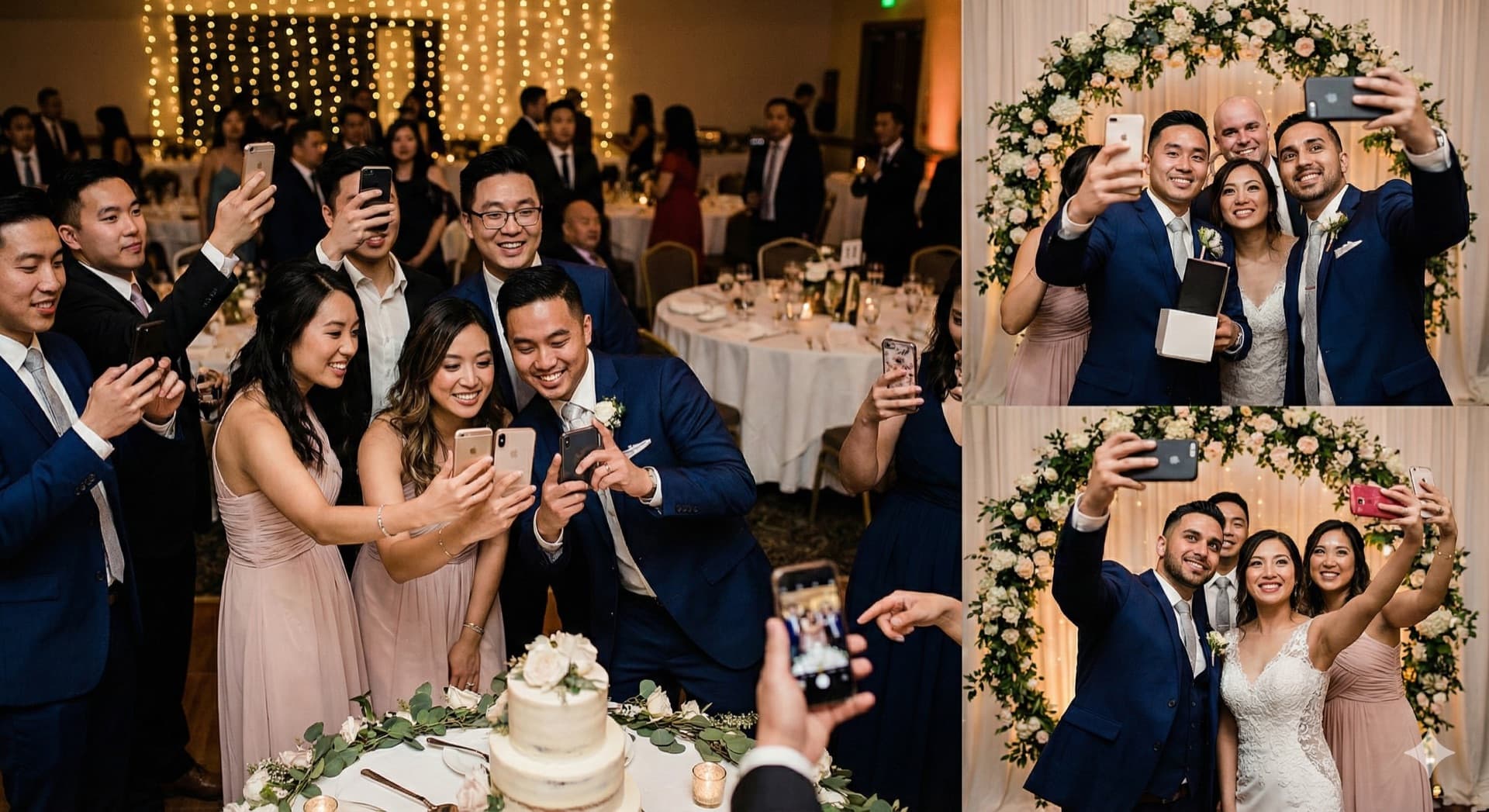
How to Collect Wedding Photos from Guests: 5 Methods Compared (2026)
The easiest way to collect wedding photos from guests is a QR code that opens an upload page in their phone browser. Here is how it compares with shared albums, group chats, hashtags and disposable cameras, and the three things that decide how many photos you actually get.

10 Ways Couples Lose Wedding Photos (And How to Prevent It)
Don't let precious memories disappear! Learn the most common ways couples lose wedding photos and simple solutions to protect them.

10 Creative Ways to Display a QR Code at Your Wedding (More Uploads)
Where you display your wedding QR code decides how many guest photos you collect. Ten placements ranked, with the size, wording and print tips for each: table cards, welcome sign, program, bar, live wall and five more.